
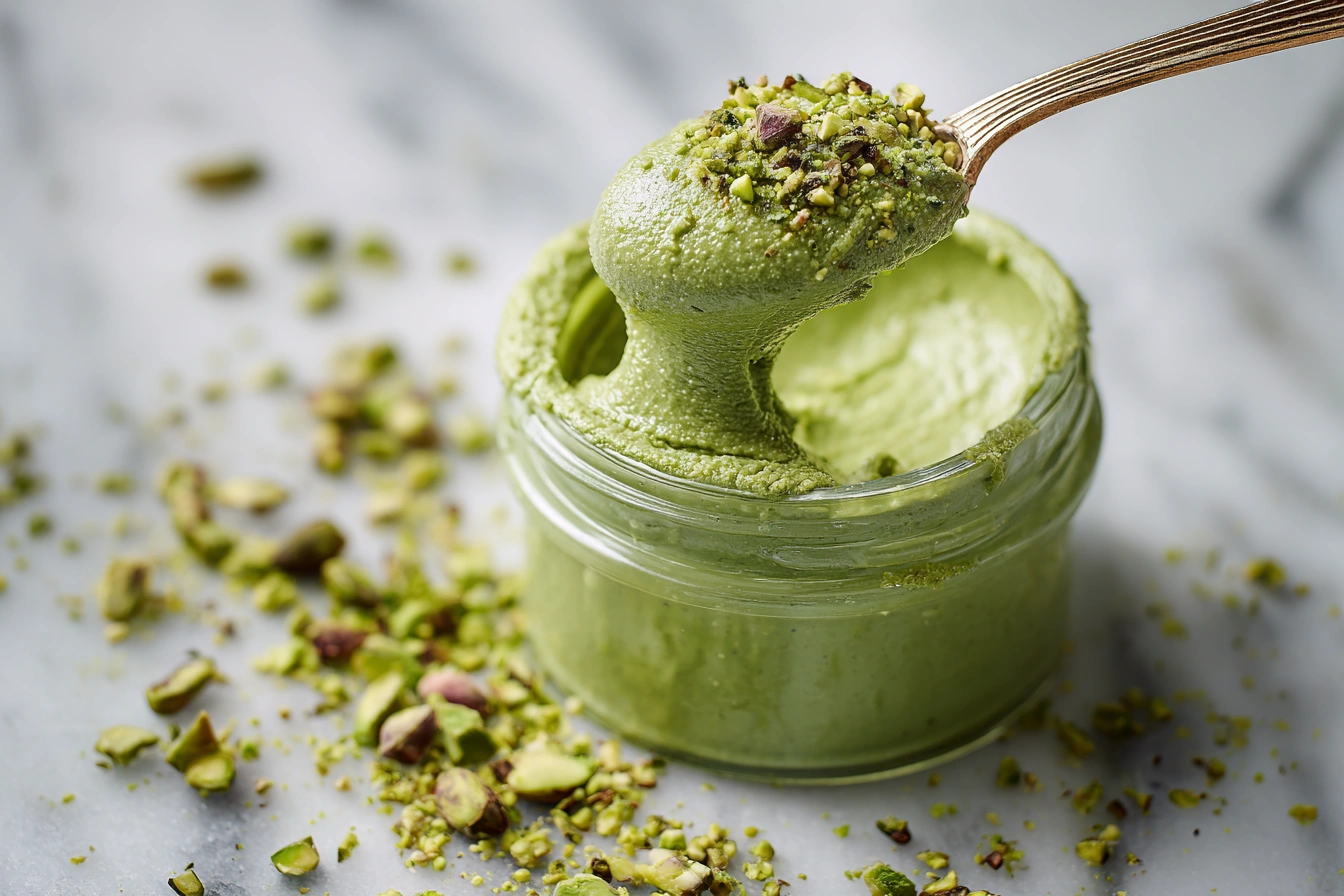
Pistachio paste is one of those ingredients that instantly elevates a recipe. Rich, nutty, naturally aromatic, and beautifully green, it adds depth to both sweet and savory creations. While it’s often associated with professional pastry kitchens, pistachios paste is surprisingly easy to make at home with just a few simple steps and high-quality pistachios. After making this recipe multiple times myself, I can confidently say that homemade pistachios paste tastes fresher, looks more vibrant, and gives you full control over texture and flavor.
Table of Contents
My Experience Making Pistachio Paste at Home
The first time I made pistachios paste, I was looking for a pure, natural alternative to store-bought pistachio spreads. Many commercial versions contain added sugar, oils, or artificial coloring, which dulls the authentic pistachio flavor. When I tried making pistachio paste at home, I was surprised by how intense and clean the taste was. The aroma while blending was incredible, and the texture became smoother with patience. Since then, I’ve used this pistachios paste in desserts, creams, and even as a spread, and it has become a staple in my kitchen.
What Is Pistachio Paste?
Pistachio paste is a smooth, concentrated blend made from finely ground pistachios. Unlike pistachio cream or pistachio spread, pistachio paste is typically unsweetened and contains minimal ingredients. Its role is to deliver pure pistachio flavor without overpowering sweetness.
True pistachios paste relies on the natural oils released during blending to form a creamy, cohesive texture. When prepared correctly, it has a rich green color and a deep, nutty taste that works beautifully in a wide range of recipes.
Ingredients for Homemade Pistachios Paste
One of the best things about pistachio paste is how simple the ingredient list is.
You will need:
- 1 cup raw, unsalted, shelled pistachios
Optional additions:
- A pinch of salt to enhance flavor
- A small amount of neutral oil (only if needed for texture)
That’s it. The quality of your pistachios matters more than anything else when making pistachio paste.

Choosing the Best Pistachios
For the best pistachio paste, use raw pistachios that are fresh and bright green. Avoid heavily roasted or salted pistachios, as they can darken the color and alter the flavor. If your pistachios still have skins, removing them will significantly improve both the color and smoothness of the final paste.
Blanching the pistachios briefly and rubbing off the skins is worth the extra step if you want a professional-looking pistachio paste.
How to Make Pistachios Paste Step by Step
1. Prepare the Pistachios
If your pistachios have skins, blanch them briefly in hot water, drain, and rub them with a clean towel to loosen the skins. Allow them to dry completely before blending. Any moisture can interfere with the texture of the pistachios paste.
2. Blend the Pistachios
Place the pistachios in a food processor. Start blending on medium to high speed. The pistachios will go through several stages:
- Coarsely chopped nuts
- Fine crumbs
- Thick, grainy paste
- Smooth pistachios paste
This process takes time. Stop occasionally to scrape down the sides of the bowl so everything blends evenly.

3. Be Patient with the Texture
At first, the pistachio paste may seem too dry or crumbly. Continue blending. As the natural oils release, the mixture will gradually become smoother and creamier.
If after several minutes the pistachio paste still feels too thick, add a very small amount of neutral oil, one teaspoon at a time. This helps the paste emulsify without diluting the flavor.
4. Adjust and Finish
Once smooth, taste your pistachio paste. Add a pinch of salt if desired. Blend again briefly until fully incorporated. The final pistachio paste should be smooth, spreadable, and intensely aromatic.

Common Mistakes to Avoid
- Rushing the blending process: Pistachios paste requires time for oils to release naturally.
- Adding too much oil: This can weaken the pistachio flavor.
- Using low-quality pistachios: The paste will only be as good as the nuts you start with.
- Blending pistachios while wet: Moisture prevents proper emulsification.
How to Use Pistachios Paste
Pistachios paste is incredibly versatile and can be used in many ways.
In Desserts
Pistachios paste is ideal for cakes, macarons, tarts, and pastries. It blends beautifully into pastry creams, mousses, and fillings, providing deep pistachio flavor without artificial additives.
In Ice Cream and Gelato
Homemade pistachios paste is perfect for frozen desserts. It gives ice cream a natural green color and a rich, authentic taste.
In Frostings and Creams
Mix pistachios paste into buttercream, whipped cream, or cream cheese frosting for an elegant, nutty twist.
As a Spread
Spread pistachios paste on toast, pancakes, or waffles. You can lightly sweeten it with honey if desired.
In Savory Dishes
Pistachios paste can also be used in sauces, pestos, or paired with yogurt for dips. Its earthy flavor works surprisingly well in savory recipes.
How to Store Pistachio Paste
Transfer your pistachios paste to an airtight container. Store it in the refrigerator for up to two weeks. For longer storage, freeze it in small portions. Pistachios paste freezes very well and can be thawed as needed.
Natural oil separation may occur over time. Simply stir or re-blend before using.
Why Homemade Pistachio Paste Is Worth It
Making pistachios paste at home allows you to control every aspect of the recipe — flavor, texture, and purity. Compared to commercial versions, homemade pistachio paste is fresher, more aromatic, and free from unnecessary additives.
From my own experience, once you try homemade pistachios paste, it’s hard to go back to store-bought options. The difference in taste and quality is immediately noticeable.
You Can Try Also Our Recipe Apple Macaroni
Frequently Asked Questions
What exactly is pistachio paste?
Pistachio paste is a smooth, concentrated preparation made by finely grinding pistachios until they release their natural oils and form a creamy paste. Unlike pistachio spreads or creams, pistachio paste is usually unsweetened and contains little to no added ingredients. Its main purpose is to provide a pure, intense pistachio flavor and natural green color for cooking and baking.
How do you make pistachio paste?
Pistachio paste is made by blending raw, unsalted pistachios in a food processor until they transition from crumbs into a thick, smooth paste. The process requires patience, as the pistachios need time to release their natural oils. A small amount of neutral oil can be added if needed to achieve a smoother consistency, but high-quality pistachios alone are often enough.
What do you use pistachio paste for?
Pistachio paste is a versatile ingredient used in both sweet and savory recipes. It is commonly added to desserts such as cakes, pastries, ice cream, gelato, macarons, and frostings. It can also be used as a spread on toast, mixed into creams, or incorporated into sauces, pestos, and fillings to add rich pistachio flavor.
Can Muslims eat pistachios?
Yes, Muslims can eat pistachios. Pistachios are naturally halal because they are plant-based and do not contain any prohibited ingredients. As long as pistachios or pistachio paste are not mixed with non-halal additives such as alcohol or animal-derived fats, they are fully permissible in a halal diet.
Final Thoughts
Pistachios paste is a simple yet powerful ingredient that can transform both everyday recipes and special desserts. With just pistachios, patience, and a good food processor, you can create a smooth, vibrant pistachio paste that rivals professional pastry products.
Whether you use it in baking, frozen desserts, or as a spread, homemade pistachios paste is a recipe worth mastering. Once you make it, you’ll find endless ways to enjoy its rich flavor and natural elegance.
This Recipe is based from this article in the link